Make Build Create: Why youth-led exhibitions matter
A reflection on Make Build Create 2026 from our Youth Programme Producer Holly.
Intelligence is diverse and expansive. Making art provides meaning and structure to ideas, feelings, memories, and ways of learning that are otherwise difficult to articulate. Creativity is not an optional extra for young people; it is a cognitive and social tool that helps build empathy, flexibility, confidence, and resilience. The ways in which children are exposed to their own potential shapes the kinds of thinkers, collaborators, and leaders they become.
At St Anne’s House, our youth programme is grounded in the belief that young people benefit from meaningful space to explore this potential. Based in Brislington, and in particular on the doorstep of St Anne’s Park, an area facing high levels of deprivation – we have deep roots locally and enable affordable opportunities in a part of Bristol where youth provision can often feel limited. Spaces like these offer something distinct from both school and home: opportunities for experimentation, curiosity, and self-definition; free from formal assessment or expectation.

“I was able to make what I wanted when I wanted without the fear of making a real mistake and just accepting the mistakes I did make as part of the pieces I created” – Participant
Creating the conditions for young people to make ambitious work – and trusting them with genuine authorship – remains one of the most valuable lessons community arts practice continues to teach us. The idea behind Make Build Create stemmed from a desire to create a platform for teenagers to inhabit a public cultural space and have their work respected in the same way as any artist exhibiting in a gallery. Not simply participating; but shaping, curating, and leading.
A central part of the format is working alongside a practising artist, as someone openly sharing their own process, materials, and ways of thinking. This year, artist Johnny Morgan-Jones (@buoysbuoysbuoys) brilliantly led the programme, supported by myself and a wonderful team of volunteers. Across three days in April, young people moved through hands-on making, experimentation, and reflection, testing ideas across materials, scales, and disciplines.


The Process:
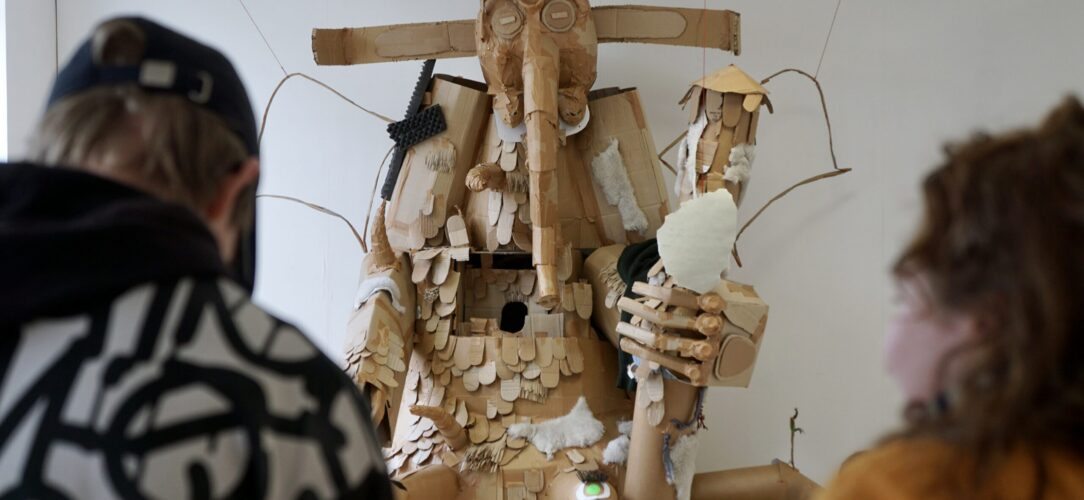
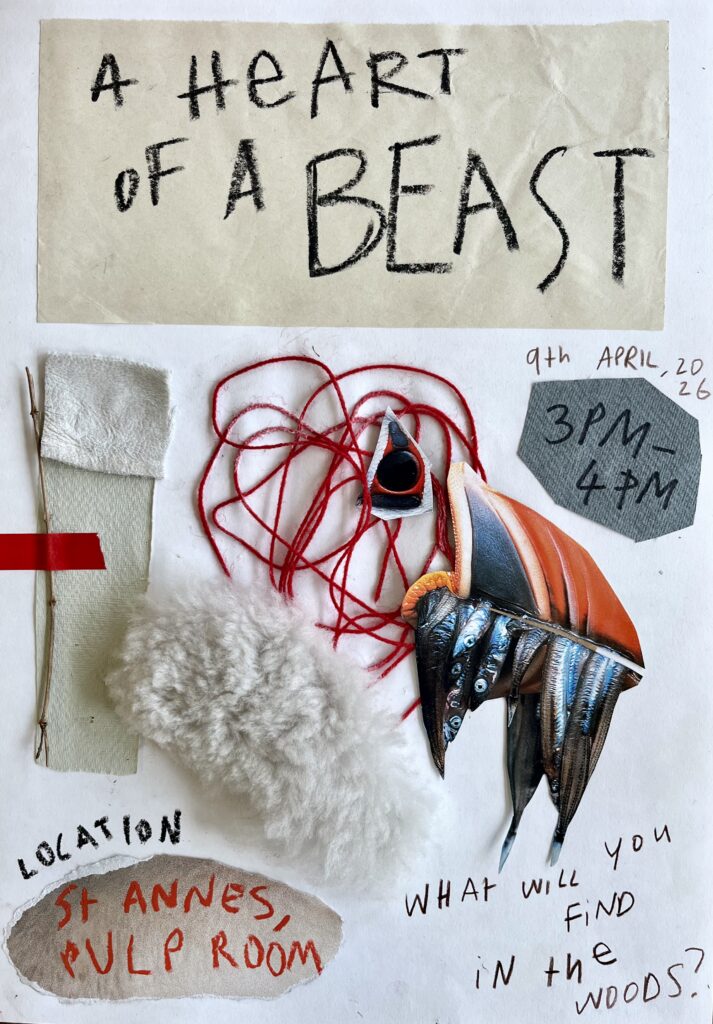
We began with folklore, and hybrid creatures as a way into mythical thinking. Through texture-making, collage, and speculative creature-building, participants slowly developed a shared visual language that expanded into a large-scale collaborative “beast”. Rather than working towards polished outcomes, the emphasis was on experimentation, play, and allowing ideas to evolve collectively. This process-led, exploratory approach is rooted in evidence around informal, non-school-based learning. For many young people, programmes like this matter precisely because they operate differently;
“My neurodivergent queer kiddo who finds a lot of groups and spaces inaccessible felt settled and comfortable in the sessions, and engaged fully with the process. You created a neuro affirming, queer inclusive, safe collaborative, explorative environment with a brilliant balance between process and structure.” – Parent
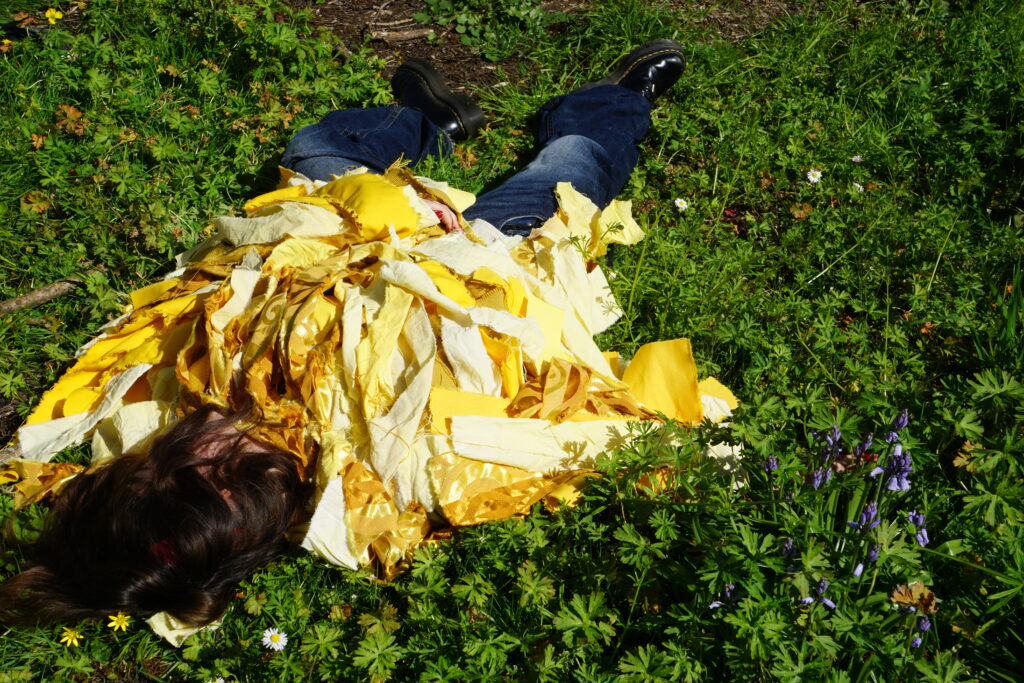

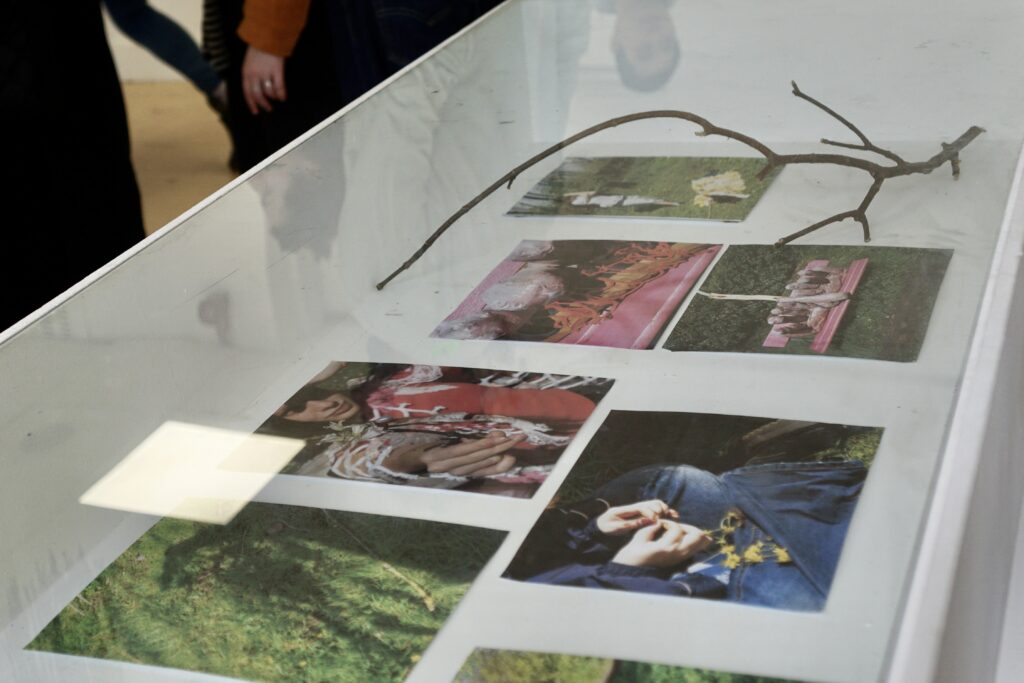
The second day built on what had already been made, shifting how materials were used. Textures became wearable; the process of making moved closer to performance and storytelling. Participants worked between photography, voice recording, writing, and large-scale construction, while beginning early conversations about exhibition-making: what does it mean to show work, and who gets to decide how it is seen?
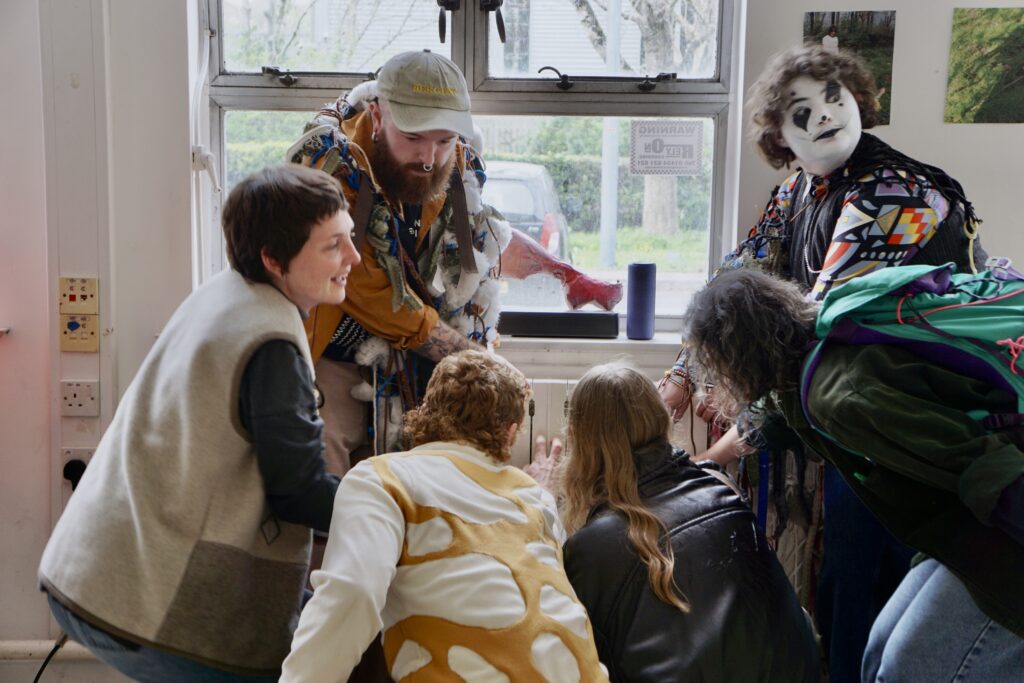
On the final day, attention turned towards bringing everything together. Young people worked in groups to think about publications, hosting, and curation; shaping not only the work itself, but how audiences might encounter it. Exhibition-making became part of the creative process rather than something separate at the end. By the afternoon, the studio had become a gallery: part finished artwork, part evidence of process, united somehow by shared myths and stories.
“I felt so alive and connected and joyous to be part of something together, and I learned how powerful playfulness and silliness is in connecting people.” – Volunteer
What’s Next:
As part of Open House Weekend, visitors will be able to experience The Heart of a Beast in the Upstairs Gallery – an exhibition shaped by both young people and tenants from across the building, many of whom have created responses to the themes explored during the programme. Young people will be present throughout the exhibition, guiding visitors through the work and sharing RISO-printed posters and catalogues developed as part of the project. Keep an eye on our socials @bricksbristol for updates.
A huge thank you to our lead artist Johnny Morgan-Jones, and epic volunteers Mailies Fleming, Amy McHugh, Lois Bryant, and all of the brilliant young people we worked with.
With thanks to our primary funder, Clarion Homes for supporting this work and Nisbet Trust for their ongoing support of our work with young people.

Our wider approach to youth programming:
The youth programme at St Anne’s House is built around three guiding ideas: Flexible Thinking, Creative Provision, and Future Careers. Together, they shape how we work with young people and what we hope they take away from being here.
At its core, the programme offers something different from school or home – a space for curiosity, experimentation, and creative risk. Based in Brislington, we stay local, accessible, and rooted in the community we work with.
Flexible Thinking is about using creative processes to build confidence, resilience, and openness. We prioritise trying things out over getting things “right”, and see mistakes as part of making. Play, humour, and silliness sit alongside reflection – all of which help young people explore ideas without fear of judgement.
Creative Provision positions our space as a “third place”: distinct from school and home. It is process-led, not outcome-led, and free from grading or assessment. Young people become “Artists in Residence” and are trusted as active participants in shaping the space alongside facilitators, with shared responsibility for how it runs.
Future Careers focuses on widening ideas of what is possible. By working with a range of creative practitioners, we share honest, varied pathways into creative work. We aim to show that careers are rarely linear, and that creative thinking is a valuable tool across many futures, not just within the arts. We recognise creativity as a core life skill: “Creativity is as important in education as literacy, and we should treat it with the same status” (Sir Ken Robinson).
Check out Bricks Youth Programme Producer Holly’s instagram: @le__var__studio